

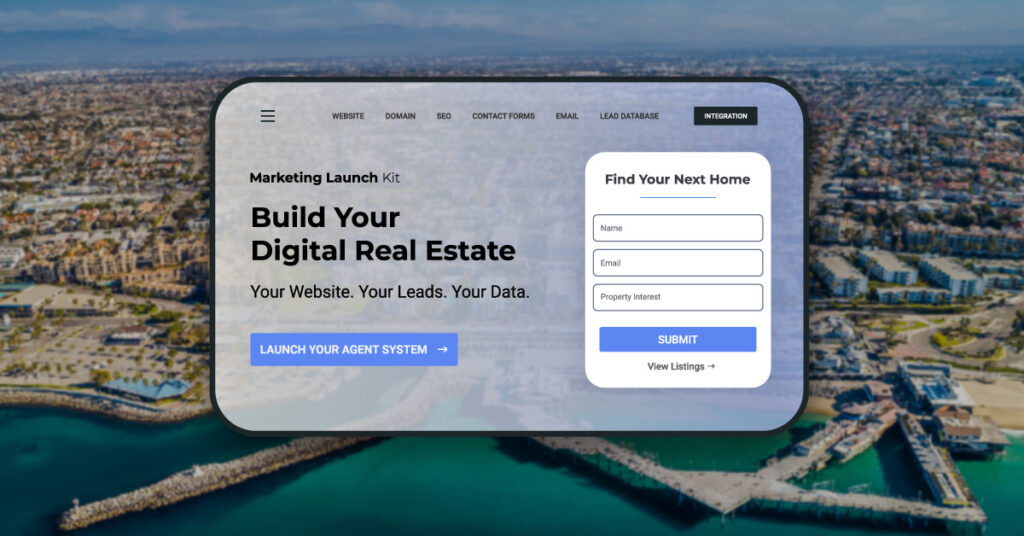
Real estate agents spend their careers helping clients build wealth through property ownership; yet many don’t apply the same ownership logic to their marketing systems. Template websites, syndicated blog content, and third-party lead platforms can generate activity, but skip building long-term branding for the agent.
This is where the concept of digital real estate becomes relevant along with common applications in the real estate industry like marketing tech, organic SEO, content generation, and self-owned websites. The truth is that smart agents are quietly taking ownership over marketing assets to win more business.
What is Digital Real Estate?
Digital real estate refers to virtual assets that are self-owned, including website, content, SEO, and lead systems, which are monetized for an interest like doing business.
For real estate agents, digital real estate involves owning and utilizing these assets to attract buyers and sellers, showcase featured listings, and close transactions. These build online authority and inbound opportunities over time.
A real estate agent’s digital real estate can include:
- Domain and website infrastructure
- Landing pages and blog articles
- SEO organic search
- Email lists and campaigns
- Buyer and seller lead capture forms
- Lead database and automations
- Marketing system integrations
When agents own these digital assets, they accumulate value with time, much like owning a home. A website gains authority as it ages. Blog articles begin ranking for more search queries in engines. AI answers start referencing the agent. Inbound leads grow steadily, and the agent’s independent brand becomes stronger online. With time, each page becomes another entry point to discover the real estate agent’s business.
Today, ownership over your website, content, and data is no longer optional. It has become a core pillar of modern real estate marketing.
The Rented Marketing Tech Problem in Real Estate
Although most agents understand the importance of digital marketing, many are unknowingly building their brand on rented marketing infrastructure.
Industry surveys show that nearly 70% of realtors have a website, but many of these sites are hosted through brokerage templates or SaaS platforms where the agent has limited control.
When a website or marketing system is attached to a subscription, agents often experience limited access to:
- Hosting environments
- Website files
- Content portability
- Lead databases
If the subscription ends or an agent changes brokerages, the digital presence built may not transfer to a new domain. Years of SEO, content, traffic, and lead history can vanish just like that.
RELATED: Open vs Closed Marketing Infrastructure
This creates a challenge in the industry. Marketing activity exists on a template, but there is limited education on self-owned real estate website systems built to own as an option for real estate agents.
There are several common tools in the real estate website and marketing ecosystem that contribute to this dynamic including:
- Paid lead platforms
- Syndicated/PLR content
- Brokerage channel dependence
Paid Lead Platforms vs Organic Search SEO
Many agents rely on paid lead platforms such as Google Ads, Facebook Ads, or Zillow. These can generate leads quickly, but results stop if ad spend stops.
Organic SEO works differently. When agents publish original content on their own websites, those pages can attract buyers and sellers long after they are created. This is also key in building a self-owned lead pipeline.
Organic search is an asset. Paid advertising is an expense.
Syndicated PLR Content that Doesn’t Rank
Some real estate marketing services provide syndicated blog posts or private label right (PLR) content libraries to help agents keep their websites active or consistently generate social posts.
While convenient, this content is often distributed across many different websites. Because search engines prioritize original and helpful information, duplicate content hardly builds strong search engine rankings or AI references for individual sites.
Agents who write and publish unique, hyper local content such as neighborhood guides or buyer/seller resources are more likely to build search visibility that sticks and draws attention.
Dependency on Brokerage Provided Websites
Many brokerages provide agent websites or profile pages as part of their platform offering.
These systems can provide basic visibility and affiliation but often operate within the brokerage’s infrastructure. As a result, the agent may not have full ownership over the domain, hosting environment, or transferability of the site content.
Brokerage websites can serve an important purpose, but they should not become the only channel an agent relies on. For agents building a lasting personal brand, owning an independent website alongside a brokerage supplied one provides a more durable digital footprint.
Build & Own Your Digital Real Estate
For real estate agents who want to build marketing equity, the starting point is ownership. This includes:
- Owning your domain name and website
- Publishing original, hyper-local content
- Capturing leads through your own website forms and systems
- Building an email list and client database
Real estate professionals understand the value of ownership better than anyone. The same principle applies online.
Agents who invest in self-owned digital infrastructure (website, content, lead systems) are building marketing assets on a long-term trajectory. Just like physical property, the value of digital real estate grows when its owned and developed consistently.
Ready to build your digital real estate & marketing infrastructure?
Marketing Launch Kit builds self-owned real estate marketing systems designed to support agents with lead generation through SEO, original content, and independent infrastructure. Instead of renting expensive platforms that disappear when the subscription ends, agents get a custom website with connected systems that they fully own.